Does Earnest Money Go Toward Your Down Payment? Explained
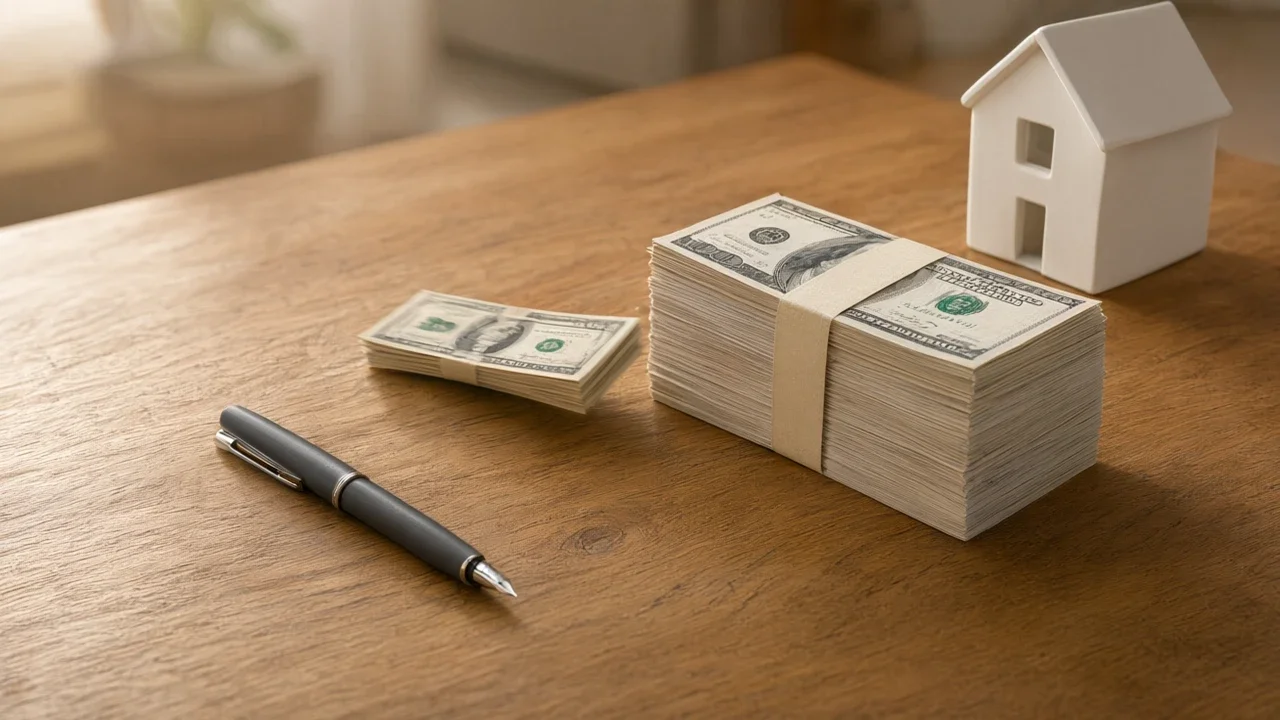
Yes, earnest money goes toward your down payment. At closing, the earnest money deposit (EMD) is credited directly to your down payment or closing costs, whichever is specified in the purchase contract. The deposit is not an additional expense on top of the down payment. Rather, it is an early installment that reduces the cash you need to bring to closing.
For a complete guide on earnest money basics, see what is earnest money.
How Earnest Money Is Applied at Closing
When you close on a property, the settlement statement (Closing Disclosure or HUD-1) lists all credits and debits. The EMD appears as a credit to the buyer. It reduces the amount of cash you need to bring to the closing table.
Here is how the math works on a $300,000 purchase:
| Item | Amount |
|---|---|
| Purchase price | $300,000 |
| Down payment (10%) | $30,000 |
| Less: Earnest money deposit | −$6,000 |
| Cash needed at closing for down payment | $24,000 |
| Closing costs (3%) | $9,000 |
| Less: EMD can also apply to closing costs | −$0 (if already applied to down payment) |
| Total cash at closing | $33,000 |
The EMD can be applied to either the down payment or the closing costs, depending on what the contract specifies. In most cases, it is applied to the down payment first. Any remainder goes toward closing costs.
Does Earnest Money Go Toward Closing Costs?
Yes. The EMD can be applied to closing costs instead of (or in addition to) the down payment. The contract and the settlement statement determine the allocation. If the EMD exceeds the down payment requirement (which is rare), the excess goes toward closing costs.
In seller-credit scenarios (where the seller agrees to pay some of the buyer’s closing costs), the EMD is typically applied to the down payment first. The seller credit covers the closing costs. The exact allocation is calculated by the title company on the settlement statement.
What Happens to Earnest Money If the Deal Falls Through?
If the deal does not close, the EMD does not go toward any down payment (because there is no purchase). Instead:
- If a valid contingency was invoked (financing, inspection, appraisal): The EMD is refunded to the buyer in full.
- If the buyer defaulted without a contingency: The EMD is forfeited to the seller as liquidated damages.
- If the seller defaulted: The EMD is refunded to the buyer, and the buyer may have additional legal claims.
The escrow agent disburses the funds according to the contract terms. They do not decide; the contract does. For more on this, see our earnest money deposit vs down payment comparison.
How to Ensure Your EMD Is Properly Credited
Make sure your EMD is applied correctly:
- Keep your wire confirmation: Save the receipt from when you sent the EMD to escrow. The title company will need to verify the deposit.
- Review the settlement statement: Check that the EMD appears as a credit on your Closing Disclosure or HUD-1. If it does not, ask the title company before signing.
- Confirm with your lender: Your lender needs to know the EMD amount to calculate your cash-to-close figure correctly.
- Get a receipt from the escrow agent: When the EMD was received, the escrow agent should have provided a receipt. Save this document.
How Much Earnest Money Should You Offer?
Typical EMD amounts are 1-3% of the purchase price:
- $200,000 home: $2,000-$6,000
- $400,000 home: $4,000-$12,000
- $600,000 home: $6,000-$18,000
In competitive markets, offering a higher EMD (3-5%) can make your offer stronger. It signals financial capacity and commitment. Remember, a higher EMD also means more money at risk if you default without a valid contingency.
One practical limitation: the “your EMD reduces cash at closing” math only holds when the transaction actually closes. Between contract and settlement, the deposit is committed, not liquid. You cannot spend or redirect it. Plan your cash flow around the deposit being out of reach until closing day.
Frequently Asked Questions About Earnest Money and Down Payments
Does earnest money go toward the down payment or closing costs?
It can go toward either, but it is typically applied to the down payment first. The settlement statement shows the exact allocation. The EMD reduces your total cash needed at closing by the deposit amount.
Do I get my earnest money back if I don’t buy the house?
Yes, if you invoke a valid contingency (financing, inspection, appraisal). If you default without a contingency, the EMD is forfeited to the seller.
Is earnest money part of the down payment?
Yes. The EMD is an early installment of your down payment, and it never becomes a separate fee or charge. At closing, it is credited toward the down payment, reducing the cash you need to bring to the closing table.
This article is for informational purposes only and does not constitute financial advice. Consult a licensed real estate professional before making purchase decisions.
Disclosure: This article contains affiliate links. We may receive compensation at no additional cost to you.